

Loading cart contents...
How to Choose an Everyday Watch: Fit, Legibility and Materials
Choosing an everyday watch is less about finding one perfect specification and more about how several details work together. A watch can look balanced in a photograph and still feel awkward on the wrist. It can be beautifully finished yet difficult to read at a glance. The most useful way to compare watches is to think about real situations: a working day, a walk, a commute, changing light and the hours between putting a watch on and taking it off.
This guide focuses on the details that make a watch easy to live with: proportions, dial legibility, case material, finishing, strap fit and practical specifications.
Start with the fit, not the diameter
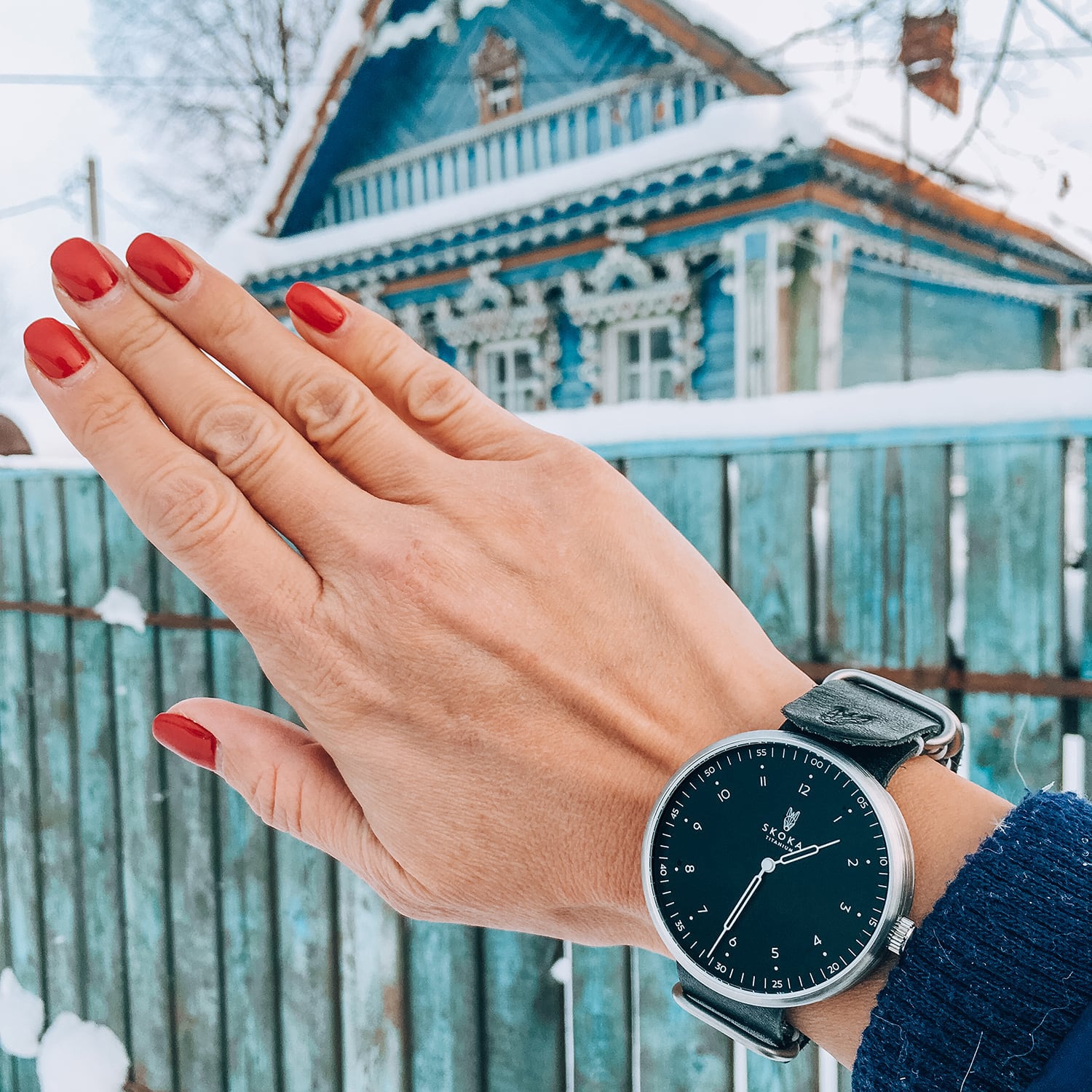
Case diameter is a useful reference, but it never tells the whole story. Two watches with the same diameter may wear very differently because of their lug-to-lug length, thickness, case shape and the position where the strap attaches.
Look at the lug-to-lug measurement
Lug-to-lug is the distance from the top of the upper lug to the bottom of the lower one. It helps indicate how much of the watch extends across the wrist. A relatively compact case with long, straight lugs can feel larger than its diameter suggests. Curved or short lugs may help the case follow the wrist more naturally.
Thickness changes the experience
A slim watch can pass under a sleeve more easily and may feel less noticeable during desk work. Thickness is not automatically a quality ranking, however: the right profile depends on the watch’s construction and purpose. Pay attention to where the mass sits and whether the case feels top-heavy when you move your arm.
Choose a dial you can read without thinking
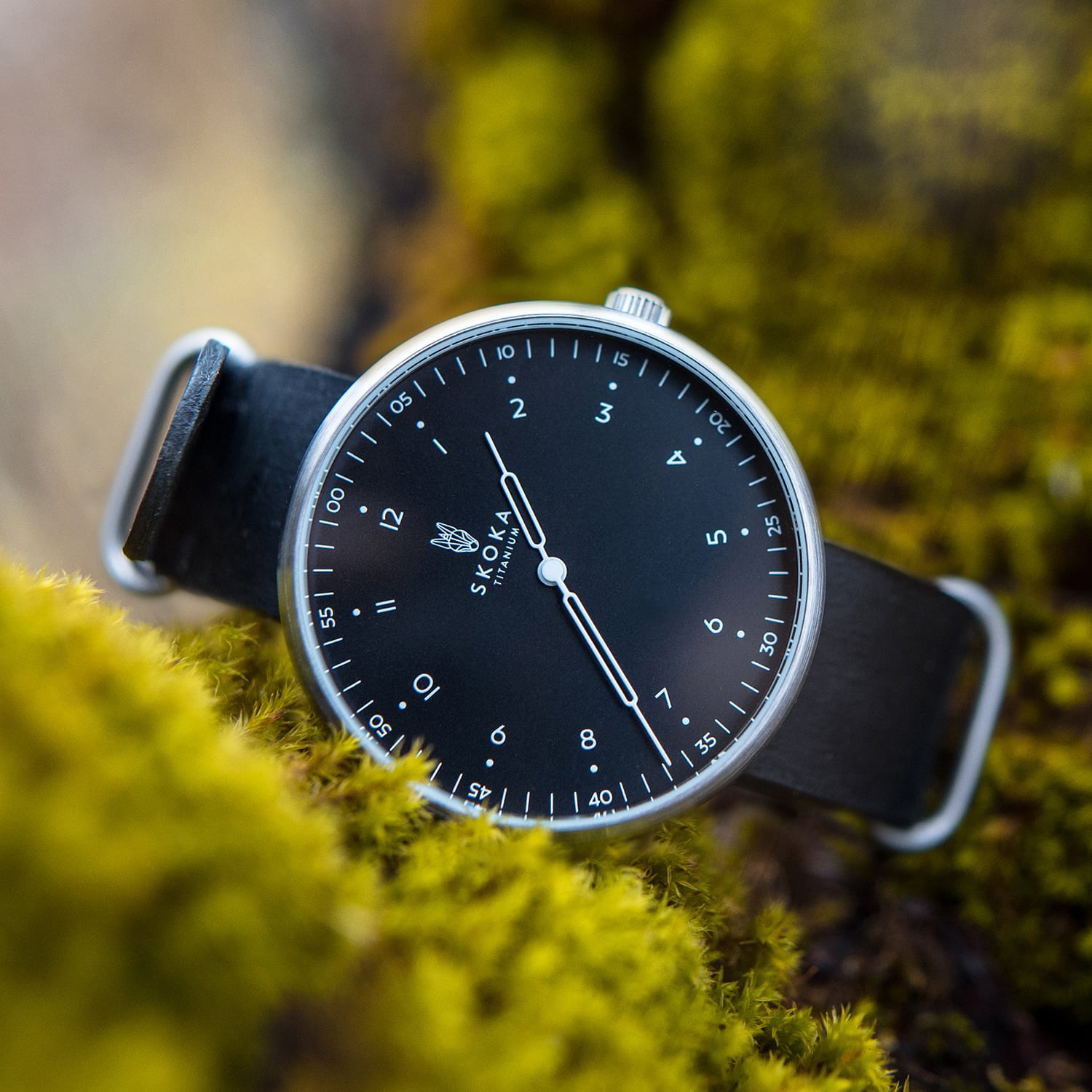
Legibility is not only about large numerals. It is the result of contrast, hand shape, marker placement and the amount of visual information competing for attention. A good everyday dial should communicate the time quickly, even when the light is less than ideal.
Contrast before decoration
Clear separation between the hands, markers and dial surface often matters more than an elaborate pattern. Dark and light dials can both be highly readable; what counts is how the components relate to one another. Glossy surfaces, applied details and reflections can change that relationship in real conditions.
Think about information hierarchy
Every added element asks for a little attention. A date display, seconds track or extra text may be useful, but it should not compete with the hour and minute hands. Minimalism works best when it is a method of prioritising information, rather than simply removing details.
Consider case material in the context of daily wear
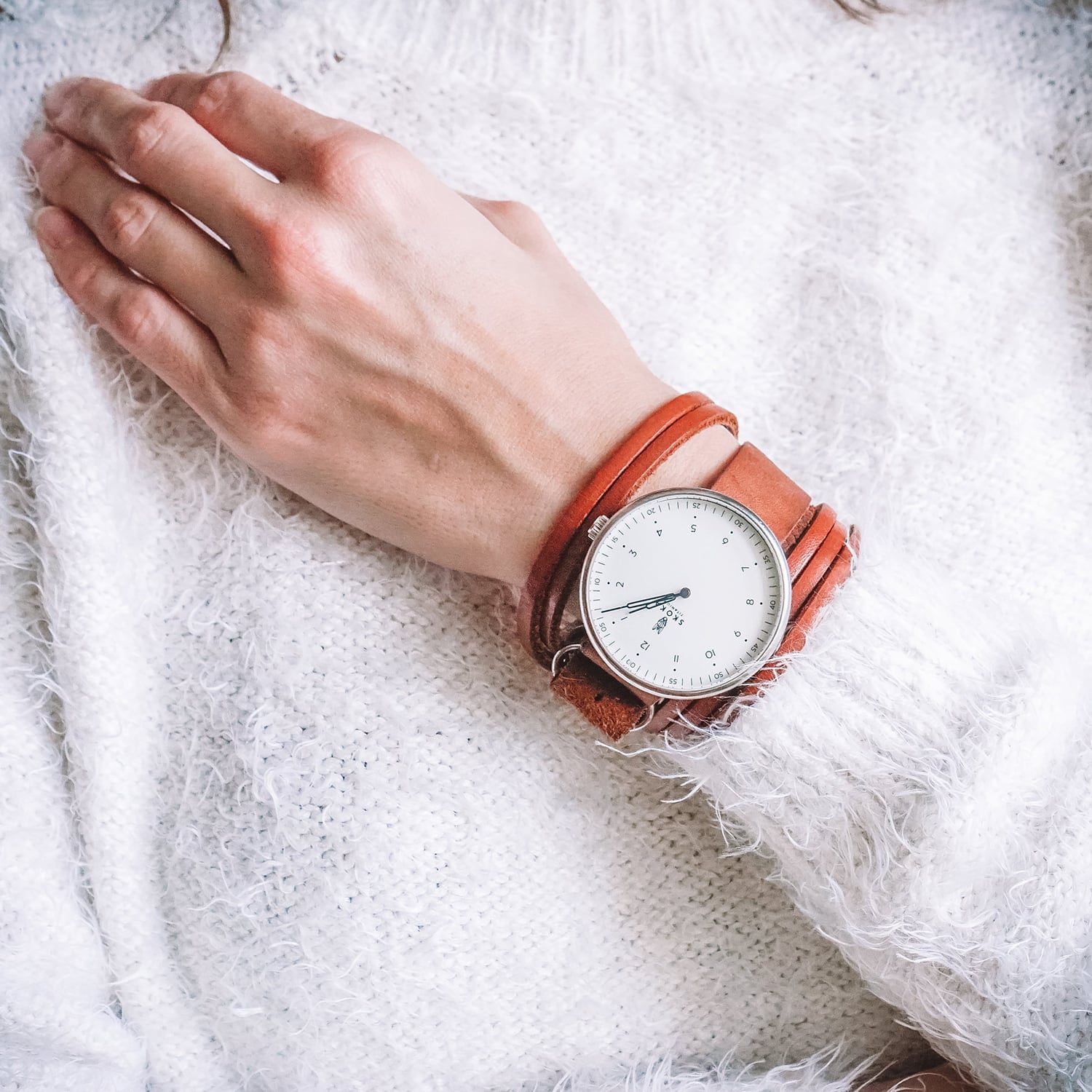
Stainless steel and titanium are both established case materials, but they offer different sensations. Steel has a familiar weight and can take a wide range of finishes. Titanium alloys are less dense, making it possible to create a substantial-looking case without the same mass. The right choice depends on what you enjoy wearing, not on a universal hierarchy of materials.
Weight is a comfort factor
Some people prefer the reassuring weight of steel; others barely want to notice their watch. If you wear one watch for long stretches, even a modest difference in mass can affect comfort. Try the watch with the strap adjusted correctly rather than judging the loose case in your hand.
Surface treatment has its own character
Satin, directional brushing and sanded finishes interact with light differently. Satin often appears even and restrained. Directional brushing makes the geometry more visible. A sanded finish can create a softer, more uniform matte impression. None is inherently the best: the choice should support the shape of the watch and the way you plan to wear it.
For a more detailed comparison of the material itself, read our guide to titanium watches and Grade 5.
Do not overlook the strap
The strap is the part of the watch that interacts most directly with your wrist. Its flexibility, thickness, taper and adjustment range can change the experience of wearing exactly the same case.
A secure fit should not feel restrictive
The watch should stay reasonably centred without requiring excessive tension. If the case slides constantly, the strap may be too loose; if it leaves persistent pressure marks or feels uncomfortable as your wrist changes size during the day, it may be too tight.
Material and construction matter
Leather, rubber, fabric and metal bracelets have different textures, ventilation and maintenance needs. Rather than choosing a material only for appearance, consider your climate, daily activity and how often you want to change straps. The way a strap bends close to the lugs is often as important as the material label.
Read the specifications as a system
Water-resistance ratings, crystal type, movement and service requirements deserve attention, but each answers a different question. A water-resistance marking describes a tested resistance under specified conditions; it should not be treated as a blanket promise for every water activity. A crystal specification helps you understand scratch behaviour and reflections. Movement type influences how a watch is powered, adjusted and maintained.
Compare the manufacturer’s actual guidance for the specific model. Avoid assuming that a specification alone describes the entire ownership experience.
How to evaluate a watch before buying
Start with three practical tests. First, check the watch on the wrist from the side as well as from above: does the case follow the wrist, and does it sit comfortably under a sleeve? Second, read the time in natural light and in a less favourable angle, not only in a studio image. Third, imagine a full day wearing it: does the weight, strap and overall visual character still make sense?
If buying online, look for straight-on and side photographs, a clear list of dimensions and realistic images of the watch in use. A product photograph can show design; it cannot completely replace an understanding of fit.
How this thinking informs SKOKA Ti-01
With SKOKA Ti-01, the design starts with a legible dial, a restrained case architecture and Grade 5 titanium. Different case finishes change the visual character without changing the underlying idea. It is an example of an approach in which material, geometry and clarity are considered together rather than as unrelated features.
In short
For an everyday watch, the best decision usually comes from the combination of fit, legibility, material and strap comfort. A headline diameter or a premium material name is not enough on its own. Choose the watch whose details work together for the way you actually live.
Frequently asked questions
What is the most important watch size measurement?
There is no single measurement that decides fit. Diameter, lug-to-lug length, thickness and case shape should be considered together.
Is a lighter watch always more comfortable?
Not necessarily. Weight matters, but balance, strap fit and case shape are just as important. Comfort is personal.
Can a minimalist watch still be practical?
Yes. When the hands and markers are easy to distinguish, a restrained dial can make everyday time reading simpler rather than harder.