
Loading cart contents...
Titanium watches: key features, who they suit, and how they differ from steel
Titanium is often described as a premium watch material simply because it is more expensive to work with than steel. That misses the point. Its value is practical: low weight, high strength, corrosion resistance and a surface character that feels distinctly different from polished steel. For an everyday watch, those qualities matter more than the label itself.
How titanium differs from steel in a watch case
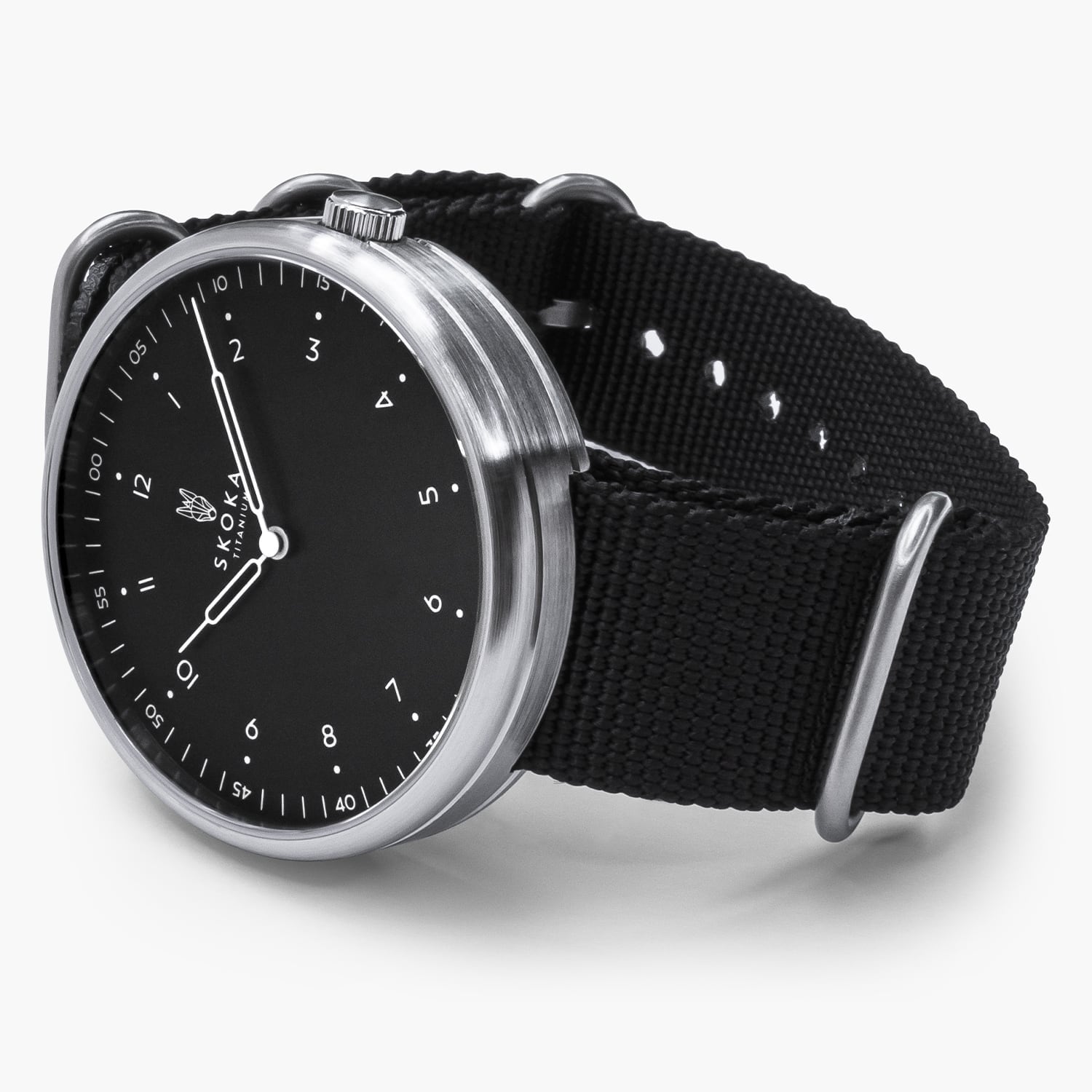
The first difference is something you feel rather than see. Titanium alloys are considerably less dense than stainless steel, so a case can have a strong physical presence without feeling unnecessarily heavy on the wrist. Grade 5 titanium, also known as Ti-6Al-4V, has a density of roughly 4.4 g/cm³ and combines low mass with high mechanical strength.
SKOKA uses Grade 5 titanium for the Ti-01 case. It is not commercially pure titanium, but an engineering alloy of titanium, aluminium and vanadium chosen for the balance between strength, weight, corrosion resistance and precise machining.
Why titanium works well for an everyday watch
Weight is one of titanium’s most useful qualities in a watch. The difference becomes more noticeable over a full day than during a short fitting. A watch designed to be worn every day should not constantly remind you that it is there.
Comfort against the skin
Titanium is widely used where long-term contact with the body matters and is generally well tolerated by the skin. As with any material, it is better to avoid absolute claims about allergies, but titanium is valued for its biocompatibility and corrosion resistance.
Resistance to moisture and corrosion
Titanium naturally forms a stable oxide layer that helps protect the metal from corrosion. For a watch intended for daily use, contact with moisture, sweat and changing environments is part of normal life rather than an exceptional condition.
A distinctive surface character
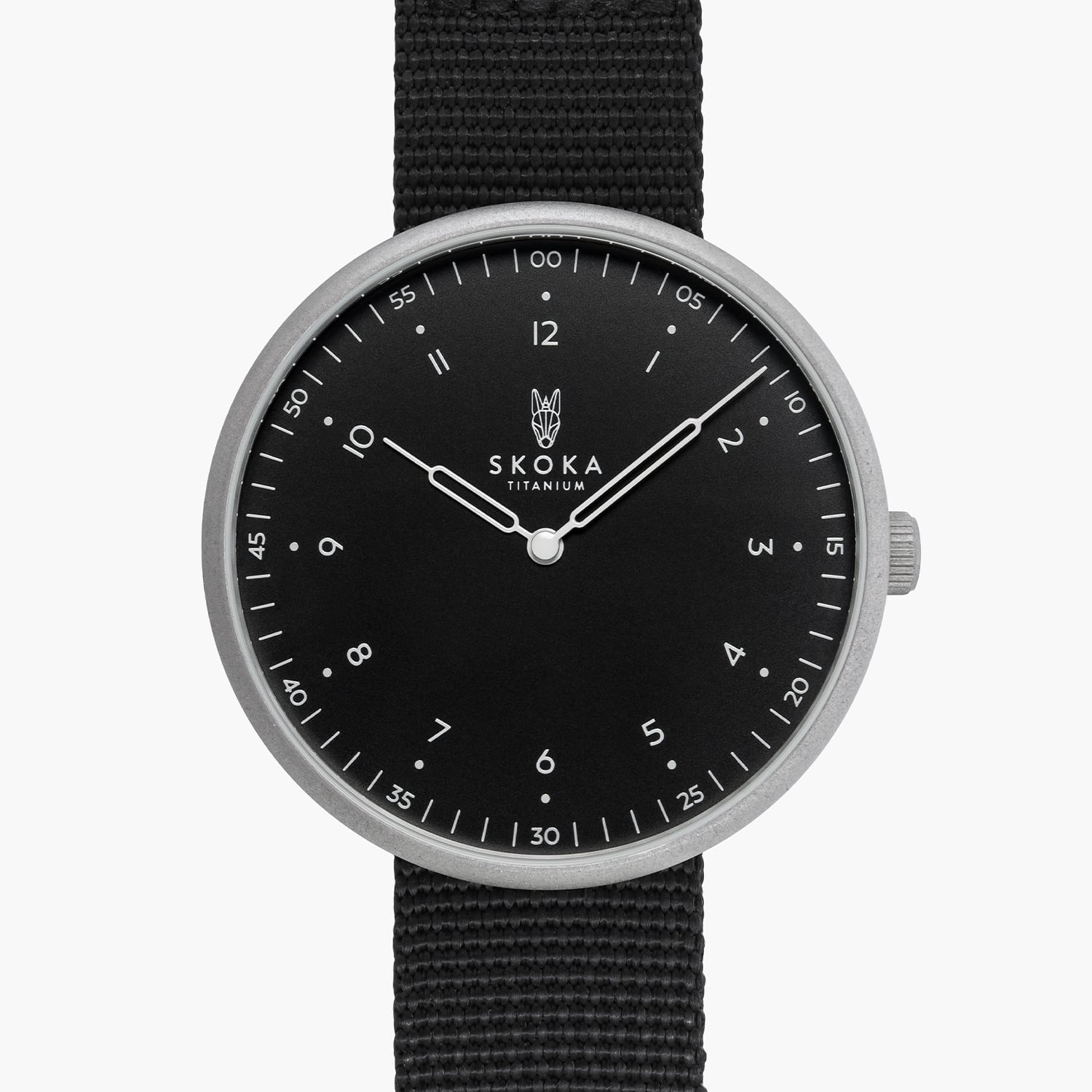
Titanium has its own colour and visual depth. It is usually quieter than polished steel and responds particularly well to satin, directional brushing and sanded finishes. The surface is not simply decoration applied to the case; it becomes part of the way the geometry is read.
Features of titanium in daily wear
The finish matters as much as the alloy
The same titanium case can look and feel very different depending on how its surface is finished. Satin creates a calm, even appearance. Directional brushing emphasises the lines and planes of the case. Sanding produces a softer, more uniform texture. Over time, each finish develops its own visual character, which is one reason we treat surface treatment as part of the design rather than a final cosmetic step.
Grade 5 demands precise machining
Grade 5 titanium is more demanding to machine and finish than many conventional watchmaking materials. From a manufacturing point of view, that means more attention to tooling, cutting parameters and finishing operations. In the finished watch, the goal is the opposite: the complexity should disappear, leaving clean transitions, controlled edges and a consistent surface.
Titanium has a technical rather than decorative aesthetic
Steel can be bright and jewellery-like. Titanium tends to feel calmer and more technical. Its strength is not visual flash, but the combination of material colour, texture and geometry. That makes it especially suitable for watches where function and construction lead the design.
Grade 2 vs Grade 5 titanium
Two grades appear frequently in watchmaking. Grade 2 is commercially pure titanium. Grade 5 is the Ti-6Al-4V alloy and offers substantially higher mechanical strength, while also being more demanding to manufacture.
| Characteristic | Grade 2 | Grade 5 |
|---|---|---|
| Material type | Commercially pure titanium | Ti-6Al-4V alloy |
| Mechanical strength | Lower | Higher |
| Machining | Less demanding | More demanding |
| Typical watch use | Cases and bracelets | Cases where strength and precise machining are priorities |
Who are titanium watches for?
Titanium makes sense when its properties solve a real problem rather than simply adding a more expensive material to a specification sheet. It is particularly relevant if you:
- wear a watch throughout the day;
- prefer less weight on the wrist;
- like a technical, matte material rather than a highly reflective finish;
- want a substantial case without unnecessary mass;
- care more about material, construction and usability than decorative complexity.
Why SKOKA uses Grade 5 titanium
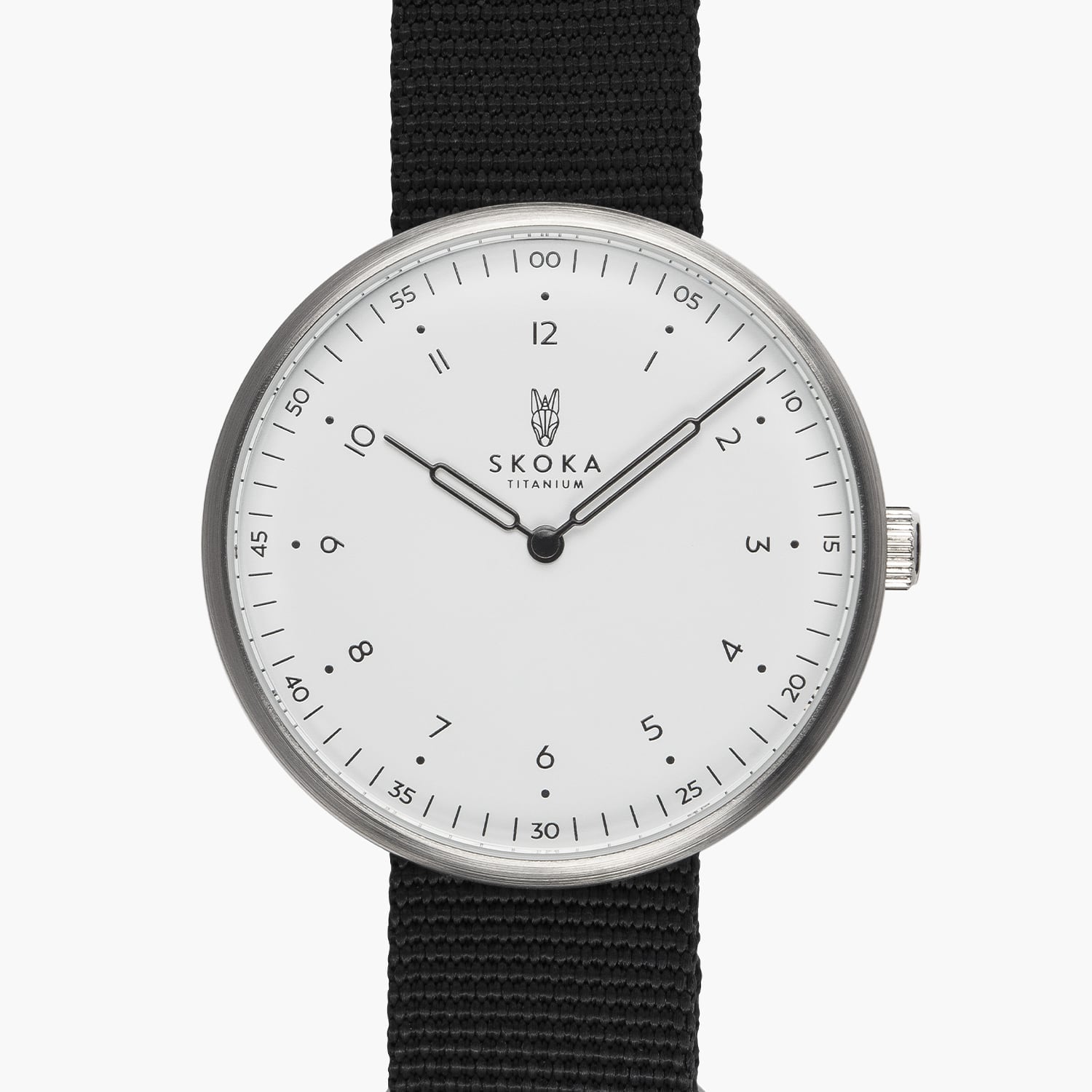
For the SKOKA Ti-01, titanium is connected directly to the idea of an everyday watch. The case should have presence while remaining comfortable, and the material should work with simple geometry and a highly readable dial rather than compete with them.
That is also why Ti-01 is available with different treatments of the same base material, including satin, directional brushing and sanded finishes. They are not decorative variations added for variety alone. Each finish changes how the same case catches light, how its geometry is perceived and how the surface develops through regular use.
In short
Titanium is not interesting because it is automatically “better” than steel. It is interesting because it behaves differently. For an everyday watch, its low weight, corrosion resistance, mechanical strength and restrained surface character can all serve a clear purpose. Grade 5 extends those qualities with higher strength and allows the material to become part of the construction, not just a line in the specification.
Frequently asked questions
Is titanium lighter than steel?
Yes. Titanium alloys are significantly less dense than common stainless steels, so a similarly sized titanium case will usually be noticeably lighter.
How does a titanium watch case change with wear?
Like any regularly worn object, the surface develops signs of use over time. How those marks are perceived depends heavily on the finish: satin, directional brushing and sanded textures all interact with light differently and develop their own character through wear.
Which is better for watches: Grade 2 or Grade 5?
There is no universal answer. Grade 2 is suitable for many watch cases and is easier to work with. Grade 5 offers higher mechanical strength and is well suited to designs where precise machining and structural performance are priorities.